Visual Balance Techniques Using Decor Accessories
Visual balance is one of the most powerful yet often overlooked principles in interior design. While furniture establishes structure, decor accessories refine how a space feels. Thoughtfully placed accessories can make a room feel calm, organized, welcoming, and complete without requiring major renovations or expensive upgrades.
Achieving visual balance does not mean making everything symmetrical or identical. Instead, it involves arranging decorative elements so that the room feels stable, comfortable, and visually satisfying. With the right approach, accessories such as artwork, lighting, textiles, and decorative objects can transform an ordinary interior into a cohesive and intentional environment.
This guide explores practical techniques that help create visual harmony using decor accessories in living rooms, bedrooms, kitchens, entryways, and beyond.
Understanding What Visual Balance Means in Interior Styling
Visual balance refers to how objects are distributed within a space so that no area feels too heavy, empty, crowded, or distracting. When accessories are arranged correctly, the eye moves naturally across the room without interruption.
Balanced interiors typically include:
- Even distribution of visual weight
- Coordinated color placement
- Thoughtful spacing between objects
- Consistent scale relationships
- Intentional focal points
These elements help a space feel comfortable and complete.
Recognize the Three Types of Visual Balance
Before arranging accessories, it helps to understand the different ways balance can be created.
Symmetrical Balance
Symmetry places matching items on either side of a central feature. This approach creates a sense of order and calm.
Examples include:
- Matching lamps on both sides of a sofa
- Identical bedside tables beside a bed
- Evenly spaced wall sconces around artwork
Symmetrical arrangements work especially well in traditional and transitional interiors.
Asymmetrical Balance
Asymmetry uses different objects that still feel equal in visual weight. This method creates a more relaxed and modern appearance.
Examples include:
- A tall floor lamp balanced by a wide plant
- A gallery wall balanced by a console table vignette
- A large artwork balanced by grouped smaller objects
Asymmetry adds personality while maintaining harmony.
Radial Balance
Radial balance arranges objects around a central focal point.
Common examples include:
- Decor arranged around a dining table centerpiece
- Circular mirror arrangements
- Round coffee table styling layouts
This technique draws attention toward the center of a space.
Use Accessories to Establish a Clear Focal Point
Every well-balanced room benefits from a visual anchor that guides attention.
Decor accessories can highlight focal areas such as:
- Fireplaces
- Statement artwork
- Coffee tables
- Entry consoles
- Bed headboards
Supporting the focal point with complementary accessories strengthens the overall layout.
Ways to reinforce a focal point include:
- Layering artwork above furniture
- Placing lamps beside feature pieces
- Adding textiles that echo surrounding colors
- Styling nearby surfaces with coordinated objects
Strong focal points create visual structure.
Balance Large Accessories With Smaller Supporting Pieces
Oversized accessories can dominate a room unless balanced thoughtfully.
Pair large pieces with smaller elements such as:
- Decorative trays
- Books
- Sculptural objects
- Vases
- Candle groupings
This layered arrangement distributes visual weight more evenly.
For example, a large table lamp becomes more balanced when paired with stacked books and a small decorative object.
Work With the Rule of Three for Natural Styling
Grouping accessories in odd numbers often creates more appealing compositions.
The rule of three works well because:
- It prevents rigid symmetry
- It encourages visual movement
- It creates layering opportunities
- It supports natural spacing
Common groupings include:
- Three candles
- Three stacked books with a vase
- Three framed artworks
- Three decorative bowls
Odd-numbered groupings feel relaxed yet intentional.
Balance Vertical and Horizontal Elements
Rooms feel more stable when vertical and horizontal accessories support each other visually.
Examples of vertical accessories include:
- Floor lamps
- Tall plants
- Vases
- Candlesticks
Examples of horizontal accessories include:
- Books
- trays
- baskets
- low sculptures
Combining both directions prevents a room from feeling flat or uneven.
Use Color Distribution to Create Harmony
Color placement influences how balanced a space feels. Accessories help spread color evenly throughout a room.
Effective strategies include:
- Repeating accent colors in multiple locations
- Matching textile tones with artwork details
- Coordinating decorative objects with rugs
- Echoing throw pillow colors in nearby decor
Color repetition connects separate areas visually.
Avoid Clustering All Accessories in One Area
One common styling mistake is concentrating too many decorative objects in a single location.
Instead, distribute accessories across:
- Shelves
- tables
- walls
- corners
- consoles
Balanced distribution improves visual flow and prevents clutter buildup.
Style Coffee Tables With Layered Accessories
Coffee tables provide excellent opportunities to create balanced compositions.
A successful coffee table arrangement often includes:
- A tray for structure
- A book stack for height variation
- A natural element such as greenery
- A decorative accent piece
Combining these layers creates depth without overcrowding the surface.
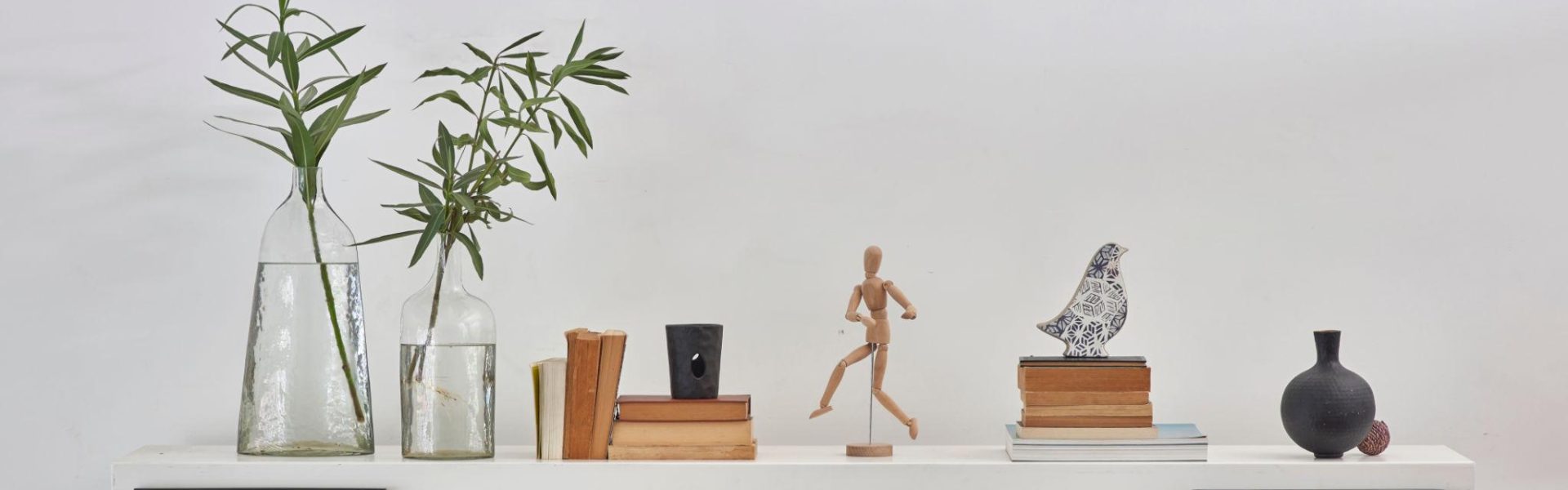
Create Balanced Shelf Styling Arrangements
Shelves can quickly become cluttered without intentional arrangement.
Balanced shelf styling often includes:
- Alternating vertical and horizontal objects
- Mixing books with decor pieces
- Leaving some open space
- Varying object heights
Spacing is just as important as the objects themselves.
Use Mirrors to Distribute Light and Visual Weight
Mirrors help balance interiors by reflecting light and surrounding decor.
Strategic mirror placement can:
- Brighten darker corners
- Expand perceived space
- Highlight focal areas
- Support symmetry near entryways
Mirrors act as both functional and decorative accessories.
Incorporate Natural Elements for Soft Balance
Natural materials help soften structured interiors and create visual comfort.
Popular natural accessories include:
- Indoor plants
- woven baskets
- wooden trays
- ceramic vases
- stone sculptures
These materials introduce texture that enhances balance.
Layer Wall Art for Visual Stability
Wall art placement strongly influences how balanced a room feels.
Effective techniques include:
- Aligning artwork with furniture edges
- Creating gallery wall grids
- Centering artwork above focal furniture
- Mixing frame sizes carefully
Balanced wall styling prevents empty-looking vertical space.
Match Accessory Scale to Furniture Size
Accessories should relate proportionally to surrounding furniture.
For example:
- Large sofas require larger artwork
- Wide consoles support wider mirrors
- Tall ceilings benefit from vertical decor elements
Correct scaling improves visual stability across the room.
Use Lighting Accessories to Strengthen Composition
Lighting serves both functional and decorative roles in balancing interiors.
Examples include:
- Table lamps
- floor lamps
- wall sconces
- pendant lights
Lighting accessories help distribute brightness evenly throughout the room.
Maintain Intentional Negative Space
Negative space refers to areas intentionally left unfilled.
Leaving open space helps:
- Reduce visual clutter
- Highlight key accessories
- Improve readability of design elements
- Support calm visual flow
Balanced rooms include both decorated and undecorated areas.
Repeat Materials for Cohesive Styling
Material repetition strengthens visual consistency.
Examples include:
- Matching metal finishes across lamps and trays
- Repeating wood tones in shelving and decor objects
- Coordinating ceramics across multiple surfaces
Material continuity ties accessories together.
Refresh Accessories Seasonally for Ongoing Balance
Updating accessories periodically keeps interiors visually fresh without major redesign efforts.
Seasonal refresh ideas include:
- Rotating pillow covers
- Updating table centerpieces
- Changing artwork prints
- Rearranging shelf displays
Small adjustments maintain harmony over time.
Avoid Overdecorating Small Surfaces
Compact surfaces require careful restraint.
Instead of filling every area, choose:
- One statement object
- One layered grouping
- One functional decorative piece
This approach preserves clarity and elegance.
Balance Accessories Across the Entire Room
Visual balance works best when considered at the room level rather than individual surfaces.
Achieve whole-room balance by:
- distributing color accents evenly
- repeating materials across zones
- alternating object heights throughout the layout
- spacing decorative elements intentionally
A room-wide approach produces stronger results than isolated styling decisions.
Frequently Asked Questions
How do I know if a room feels visually unbalanced
Common signs include one area feeling heavier than another, uneven color distribution, crowded surfaces on one side of the room, or empty walls opposite decorated ones.
Can visual balance be achieved without buying new decor accessories
Yes rearranging existing accessories often improves balance significantly without requiring additional purchases.
Should every room follow the same accessory styling approach
Each room should reflect its purpose. Living rooms support layered styling while bedrooms typically benefit from calmer and simpler arrangements.
How important is symmetry in modern interior styling
Symmetry is helpful but not required. Asymmetrical arrangements often feel more relaxed and contemporary while still achieving balance.
Do large rooms require more accessories to feel balanced
Large rooms benefit from larger scale accessories rather than simply increasing the number of decorative objects.
How can I balance accessories in open concept layouts
Repeat colors materials and object shapes across zones to visually connect spaces without creating clutter.
Is it better to style accessories all at once or gradually
Gradual styling allows adjustments over time and usually produces more thoughtful balanced interiors than styling everything at once.